

Newcastle Fish Hatchery 1868

On this site in 1866 Samuel Wilmot began to experiment with the artificial breeding of salmon. His success led the federal government in 1868 to enlarge Wilmot's project into Ontario's first...
- toronto
- ontario
- alan brown
Nanticoke

On 13th November, 1813, Norfolk volunteer militia, led by Lieutenant Colonel Henry Bostwick, routed a band of American marauders who had terrorized the country. This exploit inspirited the...
- toronto
- ontario
- alan brown
Niagara Apothecary
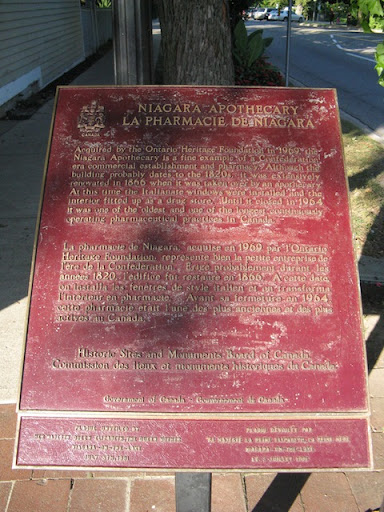
Acquired by the Ontario Heritage Foundation in 1969, the Niagara Apothecary is a fine example of a Confederation era commercial establishment and pharmacy. Although the building probably dates...
- toronto
- ontario
- alan brown
The Niagara Library

On June 8, 1800, the Niagara Library, the first circulating library in Upper Canada, was established to diffuse knowledge among area subscribers. Financed by this group, library services were...
- toronto
- ontario
- alan brown
The Newash Indian Village 1842

Following the Indian treaty of 1836, a Reserve along the western shore of Owen Sound was set aside for the Band headed by Chief Newash. In 1842, the Indian village of Newash, established here...
- toronto
- ontario
- alan brown
Narcisse M. Cantin 1870-1940

Descended from a long line of French-Canadian shipbuilders, Cantin was born on a nearby farm which his grandfather acquired about 1850. An energetic entrepreneur, inventor and cattle trader,...
- toronto
- ontario
- alan brown
Naval and Military Establishments on Lake Huron
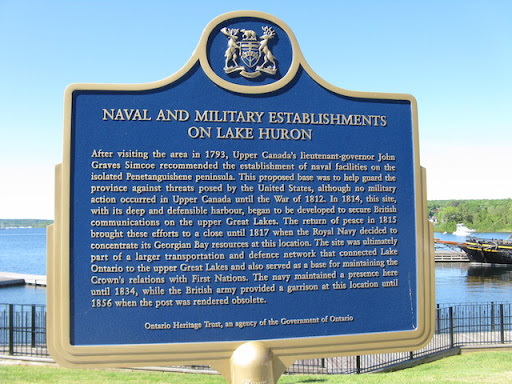
After visiting the area in 1793, Upper Canada's lieutenant-governor John Graves Simcoe recommended the establishment of naval facilities on the isolated Penetanguishene peninsula. This...
- toronto
- ontario
- alan brown
The Nelles Settlement

After receiving lands in the Grand River in 1784, the Six Nations Indians invited Captain Hendrick Nelles, a loyalist from the Mohawk Valley, to settle there with five of his sons. He and...
- toronto
- ontario
- alan brown
New Fairfield 1815

In 1792, Fairfield, a Moravian missionary settlement of Delaware Indians was established by David Zeisberger just north of here across the Thames. It was destroyed by invading American forces...
- toronto
- ontario
- alan brown
The Niagara Escarpment

Queenston Heights is part of the Niagara Escarpment, a height of land which extends 725 kilometres across Ontario from Niagara Falls to Manitoulin Island. Over 430 million years ago, a shallow...
- toronto
- ontario
- alan brown
Niagara Agricultural Society 1792-1805
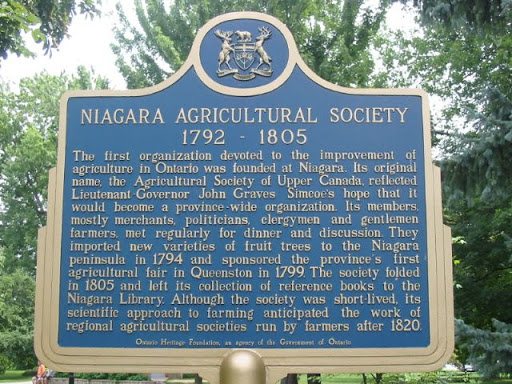
The first organization devoted to the improvement of agriculture in Ontario was founded at Niagara. Its original name, the Agricultural Society of Upper Canada, reflected Lieutenant-Governor...
- toronto
- ontario
- alan brown
The Nazrey African Methodist Episcopal (AME) Church

In 1848, refugees from American slavery built this church by hand to serve Amherstburg's growing Black community. It is named for Bishop Nazery, who led many congregations, including this...
- toronto
- ontario
- alan brown
Nickel Mining in Canada

Canada is a leading producer of nickel and the mining of this metal has contributed significantly to the nation's economy. The industry is closely tied to the Sudbury Basin whose mines...
- toronto
- ontario
- alan brown
The Norwich Quaker Settlement
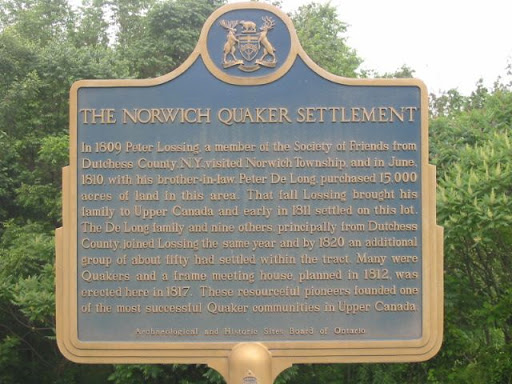
In 1809 Peter Lossing, a member of the Society of Friends from Dutchess County, N.Y. visited Norwich Township, and in June, 1810, with his brother-in- law, Peter De Long, purchased 6070 ha of land...
- toronto
- ontario
- alan brown
The North West Company Post

Travellers on the canoe route to the West had to make a portage around the St. Mary's rapids. The North West Company established a fur-trading post south of the river by 1791. After the...
- toronto
- ontario
- alan brown
Navy Island

The British used Navy Island from 1761 to 1764 as a shipyard in which to build the first British decked vessels to sail the upper lakes. These were essential in maintaining the supply lines...
- toronto
- ontario
- alan brown
Nipigon Canoe Route

Indigenous peoples who hunted and traded here thousands of years ago developed a water route by which they could travel from Lake Superior to James Bay via Lake Nipigon and the Albany...
- toronto
- ontario
- alan brown
Nicolas Perrot ca. 1644-1717

Explorer, interpreter, fur trader and diplomat, French-born Perrot played an important role in the establishment and protection of New France's western frontier during the last four decades of the...
- toronto
- ontario
- alan brown
Neutral Indian Burial-Ground
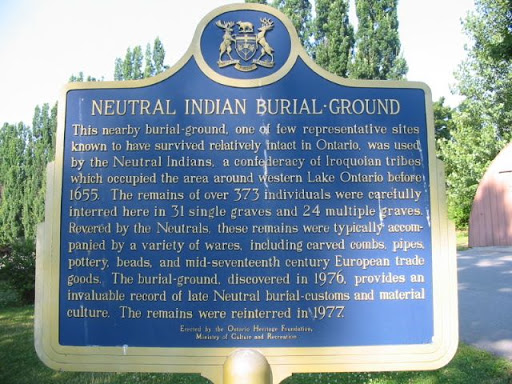
This nearby burial-ground, one of few representative sites known to have survived relatively intact in Ontario, was used by the Neutral Indians, a confederacy of Iroquoian tribes which occupied...
- toronto
- ontario
- alan brown
The Northern Railway Company of Canada

In May, 1853, The Ontario, Simcoe and Huron Union Railroad Company ran the first steam train in this province, from Toronto to Aurora. By January, 1855, the company had completed its 153...
- toronto
- ontario
- alan brown